How to Choose the Right Coach: Online or In-Person?
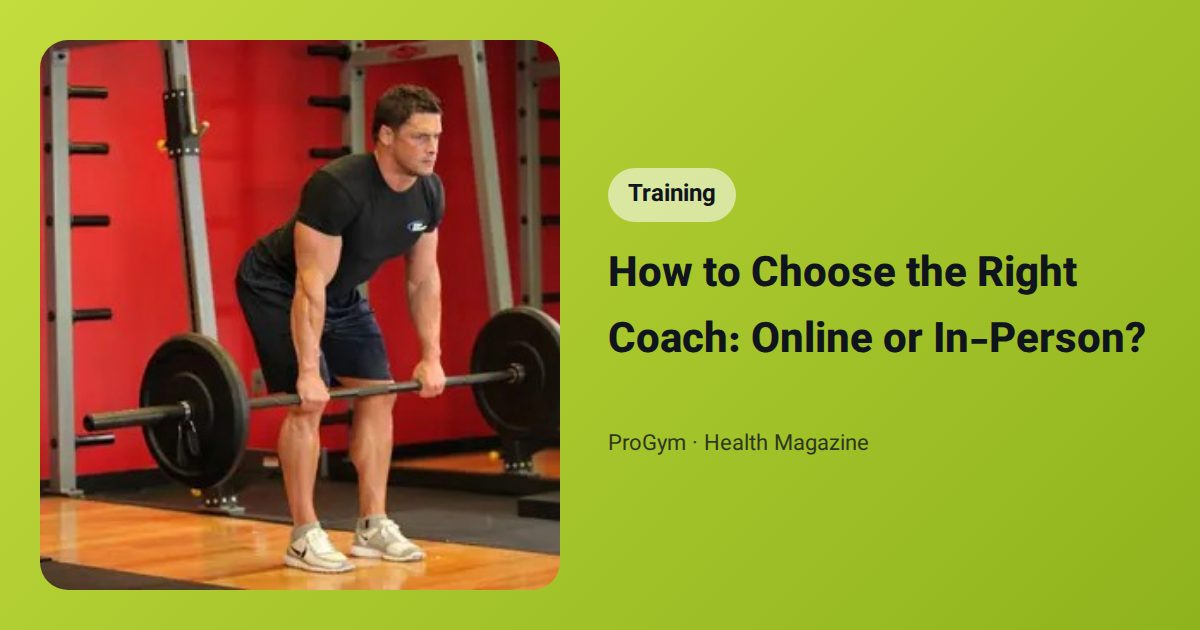
After a few months of unstructured training, many of us decide we need a coach. Choosing one is harder than it sounds: social media is full of before-and-after photos, prices vary wildly, and it is unclear whether the trainer at your local gym is a better bet than an online coach in another city. This article gives you a simple framework for finding the right coach for you.
Clarify your goal and situation first
Before searching, answer three questions: What is my main goal (fat loss, muscle gain, general fitness, returning after an injury)? How many days a week can I realistically train? And do I have any medical condition or injury history I must discuss with a doctor? The answers shape the type of coach you need. A beginner mostly needs sound movement instruction; an experienced lifter stuck on the same numbers needs programming and analysis.
Online or in-person? An honest comparison
Neither is inherently better; each fits different circumstances.
| Factor | In-person coach | Online coach |
|---|---|---|
| Technique correction | Instant and hands-on | Via video, with delayed feedback |
| Motivation and oversight | Physical presence builds commitment | Requires more self-discipline |
| Cost | Usually higher, especially private sessions | Usually more affordable |
| Access | Limited to your city and the coach's hours | Choose from coaches nationwide |
| Flexibility | Lower | Higher; good for travelers and shift workers |
| Best for | Beginners, rehab, heavy lifts | Consistent self-starters, home training, intermediates |
If you are new and have not learned the squat or deadlift pattern yet, a few in-person sessions are extremely valuable. Afterwards you can continue with an online coach and meet occasionally for technique checks. For many people this hybrid offers the best return on money.
Credentials: what to verify
In Iran there are several official coaching pathways, and anything a coach claims should be verifiable:
- Federation coaching certificates: Level 3, 2 and 1 coaching courses from relevant federations (for example bodybuilding) or provincial sports boards. Ask to see the certificate and its date.
- University education: Physical education, sports science or exercise physiology gives a solid foundation, although practical experience matters too.
- Additional courses: Corrective exercise, women's training, senior fitness or rehabilitation. These show real specialization.
- A genuine track record: Experience with people like you, not just photos of a few exceptional clients.
Credentials alone do not guarantee quality, but the inability to present any is a serious question mark. ProGym's verified specialists section exists so that coaches' documents are reviewed before their profile is shown, saving you from playing detective.
Red flags: when to walk away
- Fast, guaranteed results: "Lose 15 kg in 30 days" is sales talk, not science. Bodies respond at different speeds.
- One program for everyone: If they send the same file without asking about your history, injuries and lifestyle, there is no personalization.
- Selling drugs or supplements: A coach who makes prescribing or selling such products part of the deal has stepped outside their role. Any decision about taking a substance is your own responsibility and should always involve your doctor.
- Extreme diets: Very low calories, eliminating whole food groups, or any advice that leaves you weak and drained.
- Ignoring pain: "Pain means you're growing" is not true for joint pain.
- Poor responsiveness: Messages go unanswered for days or sessions are constantly cancelled.
- Vague contracts and pressure to pay upfront: especially long-term payment with no trial period.
Questions to ask in the first conversation
- What experience do you have with people of my goal and level?
- What is my program based on, and how often is it revised?
- What do you do if I have an injury or medical condition? Do you coordinate with a doctor or physiotherapist?
- How does follow-up work, and what is your typical response time?
- How much nutrition guidance do you give? (A fitness coach should not replace a dietitian or physician.)
- How do we measure progress, and what happens if there is none?
- What are the cancellation or coach-change terms? Is there a trial period?
Notice how they answer. A good coach asks questions, listens and explains simply; a weak one tends to impress you with jargon.
Costs: the big picture without exact numbers
Prices in Iran change with city, experience and inflation, so learn the pattern instead of a fixed figure:
- Private in-person sessions are usually the most expensive option, because you are buying the coach's direct time.
- Online coaching with a monthly plan and messaging follow-up is usually more economical.
- Ready-made programs or group packages are cheaper but less personalized.
- A price far below market can signal low effort or weak credentials; a very high price does not automatically mean quality.
The right yardstick is value for money: a pricier coach who gets your technique right in three months may cost less overall than a cheap one who keeps you confused for six. Set a budget you are comfortable with and look for the best within it.
How to evaluate progress once you start
Working with a coach should be measurable. Track a few indicators from day one:
- Training performance: weight, reps and execution quality on main lifts. Gradual increases are a reliable sign.
- Body measurements: waist, hips, arm circumference and same-angle photos every four weeks. Body weight alone can mislead.
- Subjective markers: energy, sleep, mood and fatigue.
- Adherence: the percentage of sessions you completed. If you cannot stick to the plan, it may not fit your life.
After 6 to 8 weeks, do an honest review. If technique has improved, strength is up and the plan is workable, you are on track. If you see nothing, talk to your coach first; if nothing changes, switching coaches is perfectly normal.
Tools that make working together easier
On ProGym you can pick a coach from verified specialists and see their expertise and history. Coaches publish ready-made programs, an affordable and safe way to start; the coach session calendar keeps appointments organized, and the Companion Coach feature helps you get follow-up and guidance through the week. If friendly competition keeps you motivated, the leaderboard and monthly league can reinforce your commitment.
An important note on health
If you have heart disease, high blood pressure, diabetes, joint problems or any other medical condition, consult your doctor before starting and tell your coach too. Decisions about your health are your own responsibility, and no coach replaces medical advice.
Summary: Define your goal, verify credentials, avoid exaggerated promises and anyone selling drugs or supplements, ask a few key questions and measure progress with concrete indicators. In-person coaching is great for learning technique, online coaching for flexibility and cost; combining both often works best.
Frequently asked questions
Do I absolutely need a coach to start?
Not strictly, but a few sessions of proper instruction save beginners from injuries and wasted time. You can start with a coach's ready-made program and begin personal coaching later if needed.
Is an online coach really as effective as an in-person one?
For disciplined people who know basic technique, yes. If you are new, combining a few in-person sessions with online follow-up works best.
How can I tell whether a coach's certificate is genuine?
Ask to see the federation or university document and, if necessary, check with the issuing body. On ProGym, coaches in the verified specialists section are reviewed before they are displayed.
When should I switch coaches?
If after 6 to 8 weeks you see no measurable progress in technique, strength or adherence, and talking to your coach does not help, switching is reasonable.
Workout and nutrition plans matched to your goal and level, free.