Rest Between Sets: How Long to Rest for Each Goal
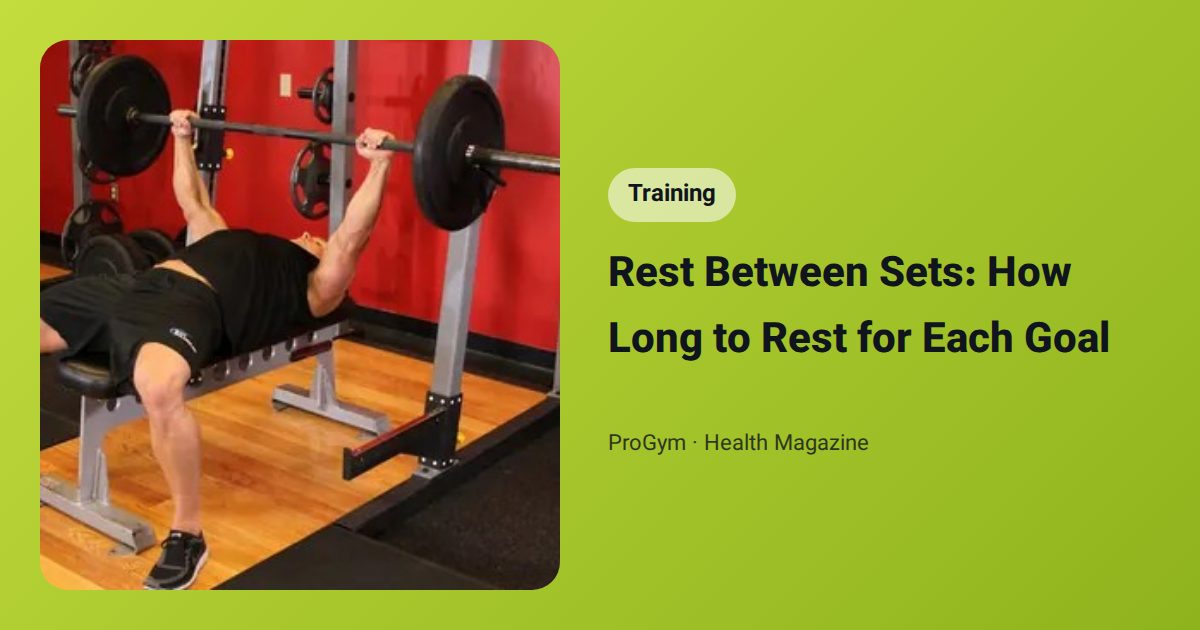
In every gym you'll see two types of lifter: the one who spends 10 minutes on their phone between sets and the one who rushes from machine to machine without catching their breath. Which is right? The answer is that rest between sets should be set according to your training goal, the type of exercise and your fitness level. This simple, often ignored variable directly affects the weight you lift, the reps you complete, the quality of your form and ultimately your results.
What happens in your body while you rest between sets?
During a heavy set, muscles rely mainly on fast energy systems: phosphocreatine and the breakdown of glucose. Phosphocreatine stores recover by about half within roughly 30 seconds and almost completely within about 3 to 5 minutes. At the same time, heart rate drops, breathing settles and your nervous system gets ready for the next set. If rest is too short, you'll manage fewer reps or less weight on the next set; if it is too long, your body cools down and the session drags on for no reason.
Rest between sets for strength
If your goal is lifting heavier on main lifts such as the squat, deadlift, bench press and overhead press, and you train with low reps (1 to 5) and heavy loads, 3 to 5 minutes of rest is recommended. Research shows longer rest in this setting helps maintain performance on later sets and leads to greater strength gains. Warm-up sets need less rest.
Rest between sets for muscle growth
For years, lifters were told to rest only 60 to 90 seconds for hypertrophy, on the belief that more fatigue and a bigger "pump" mean more growth. Newer research paints a different picture: with adequate rest you complete more reps and weight on later sets, raising total training volume, which is the main driver of muscle growth. In summary:
- Heavy compound lifts (squat, presses, barbell row, Romanian deadlift): about 2 to 3 minutes.
- Isolation and machine exercises (curls, triceps work, lateral raises, leg curls): about 60 to 90 seconds.
- Resting less than a minute on big lifts usually reduces reps, unless you deliberately add extra sets to save time.
Rest for muscular endurance
If your goal is the ability to sustain effort for longer, for example for mountain hiking, physical work or team sports, higher reps (15 to 25) with lighter weights and 30 to 60 seconds of rest are appropriate. This trains your body to tolerate fatigue and clear metabolic by-products faster.
Is short rest better for fat loss?
This is a common belief. Short rest keeps heart rate high and makes the workout feel harder, but the difference in total daily energy expenditure is usually small. Fat loss depends above all on a calorie deficit from your diet. During a fat-loss phase, the main job of strength training is to preserve muscle and strength, so keep the rest periods that suit muscle building and add daily walking or separate cardio sessions to burn more energy.
Summary table: rest time by goal
| Goal | Rep range | Suggested rest |
|---|---|---|
| Maximal strength | 1 to 5 | 3 to 5 minutes |
| Muscle growth (compound lifts) | 6 to 12 | 2 to 3 minutes |
| Muscle growth (isolation lifts) | 8 to 15 | 60 to 90 seconds |
| Muscular endurance | 15 to 25 | 30 to 60 seconds |
| Power and jumps | 1 to 5 (explosive) | 2 to 4 minutes |
Factors that change your rest time
Fitness level and experience
Beginners usually train with lighter loads, and 60 to 120 seconds of rest is often enough. Experienced lifters moving heavier weights need more rest on main lifts.
Proximity to failure
The closer you take a set to muscular failure, the more rest you need. A set that leaves 1 to 2 reps in reserve recovers faster than a set taken to complete failure.
Temperature and gym conditions
In hot, poorly ventilated gyms, especially during summer in southern and central Iran, your body needs more time to cool down and bring your heart rate back down. A few extra seconds of rest and a drink of water make sense in these conditions.
Sleep and nutrition
After a sleepless night or a day without proper meals, you may need longer rest. Listen to your body.
A simple rule: ready means go
If you don't want to count seconds, use this practical rule: when your breathing is close to normal, the burning in the muscle has faded and you feel mentally ready to do the next set at the same quality, start. To avoid endless breaks, set an upper limit with your phone timer as well.
How to rest enough when time is short
If you're short on time, use antagonist supersets instead of cutting rest on a single exercise; for example, a set of bench press followed by a set of lat pulldowns. Each muscle still gets enough rest, but the whole session gets shorter. You can also keep full rest on your main lifts and use shorter rest on accessory work.
What to do while you rest
- Drink: a few sips of water, especially in long sessions or hot weather.
- Log it: write down the weight and reps so you can track progressive overload.
- Move lightly: easy walking or shaking out your limbs keeps blood flowing.
- Rehearse the next set: run through the key technique cues in your head.
- Avoid social media: your phone tends to turn one minute into five.
Common mistakes about rest between sets
- One rest time for every exercise: heavy squats and dumbbell curls don't need the same rest.
- Short rest for the "pump": the pump feels great, but it isn't the main driver of growth.
- Hogging equipment during long rests: at busy times, let others work in between your sets.
- Ignoring warning signs: dizziness, severe breathlessness or an unusual racing heartbeat mean you should stop training, not just adjust your rest.
Health and nutrition note
If you have heart disease, high blood pressure, diabetes or any other medical condition, get clearance from your doctor before starting heavy resistance training; adequate rest between sets and avoiding long breath-holding are usually even more important in these cases. For better recovery, complete meals with natural protein sources such as chicken, fish, eggs, yogurt and legumes are enough. Any decision about supplements or sports medications is your own responsibility and should be made with your doctor's advice.
Summary
The short answer to "how long should rest between sets be?" is: 3 to 5 minutes for strength, 2 to 3 minutes on big lifts and 60 to 90 seconds on small lifts for muscle growth, and 30 to 60 seconds for endurance. Treat rest as part of the program, not wasted time. To log your sets and track progress, sign up for ProGym, and visit the exercise library for proper technique.
Frequently asked questions
Does shorter rest build more muscle?
No. Recent evidence shows that on compound lifts, 2 to 3 minutes of rest preserves reps and load, leading to more volume and growth. Shorter rest is better suited to isolation exercises.
How long should beginners rest between sets?
For most beginners, 60 to 120 seconds is enough. If the weight is getting heavier or your breathing hasn't settled, rest a few seconds longer.
Is resting more than 5 minutes harmful?
It isn't harmful, but it usually brings no extra benefit, lets your body cool down and lengthens the session. Only very heavy sets in strength athletes may require it.
Should I cut my rest periods to lose weight?
There's no need. Weight loss depends mostly on your diet. Proper rest helps preserve muscle and strength, and you can add walking or cardio to burn more energy.
Workout and nutrition plans matched to your goal and level, free.