Exercise After 40: A Safe Training Plan for Middle-Aged Adults
Many people reach their forties and assume it is too late to start training, or that the gym is only for the young. The opposite is true: exercise after 40 is one of the most effective things you can do for your heart, bones, muscles, sleep and mood. The main difference from your twenties is that you need to start smarter, take recovery more seriously and progress gradually. This article gives a safe, practical plan for middle-aged adults, whether you are a complete beginner or returning after years away.
What changes in the body after 40?
Understanding the normal changes of midlife explains why some training principles matter more at this age:
- Gradual loss of muscle: from around your forties, without strength training you lose some muscle and strength every year. This process, called sarcopenia, can be slowed substantially with regular resistance training.
- Lower bone density: this speeds up particularly in women after menopause. Weight-bearing and strength exercise are key signals for maintaining bone.
- Slower metabolism and more belly fat: a large part of this comes from inactivity and muscle loss, not age alone.
- Reduced flexibility and stiffer joints: tendons and ligaments lose some elasticity and need a longer warm-up.
- Slower recovery: muscles may take longer than before to be ready for the next hard session.
The good news is that research consistently shows middle-aged and even older adults respond very well to strength and aerobic training, and can noticeably improve strength, endurance and body composition.
Before starting exercise after 40: check-up and assessment
If you have been inactive for a long time, have a condition such as high blood pressure, diabetes, heart disease, joint or spine problems, or a family history of early heart disease, talk to your doctor and get clearance before starting an exercise program. Depending on your situation, your doctor may recommend blood tests, an ECG or an exercise stress test.
Alongside the medical check, a simple self-assessment is useful. Write these down so you know your starting point:
- Body weight, waist measurement and resting blood pressure
- How many minutes you can walk briskly without becoming badly out of breath
- How many times you can stand up from a chair without using your hands
- Whether you have pain or limited movement in your knees, back or shoulders
Chest pain or pressure, unusual shortness of breath, dizziness or an irregular heartbeat during activity are serious warning signs. If they occur, stop exercising immediately and see a doctor.
The four pillars of a balanced midlife training plan
International guidelines for adults recommend at least 150 minutes of moderate-intensity aerobic activity per week plus at least two strength sessions covering all major muscle groups. For middle-aged adults, two more components deserve special attention: mobility and balance.
1. Strength training: your most important investment
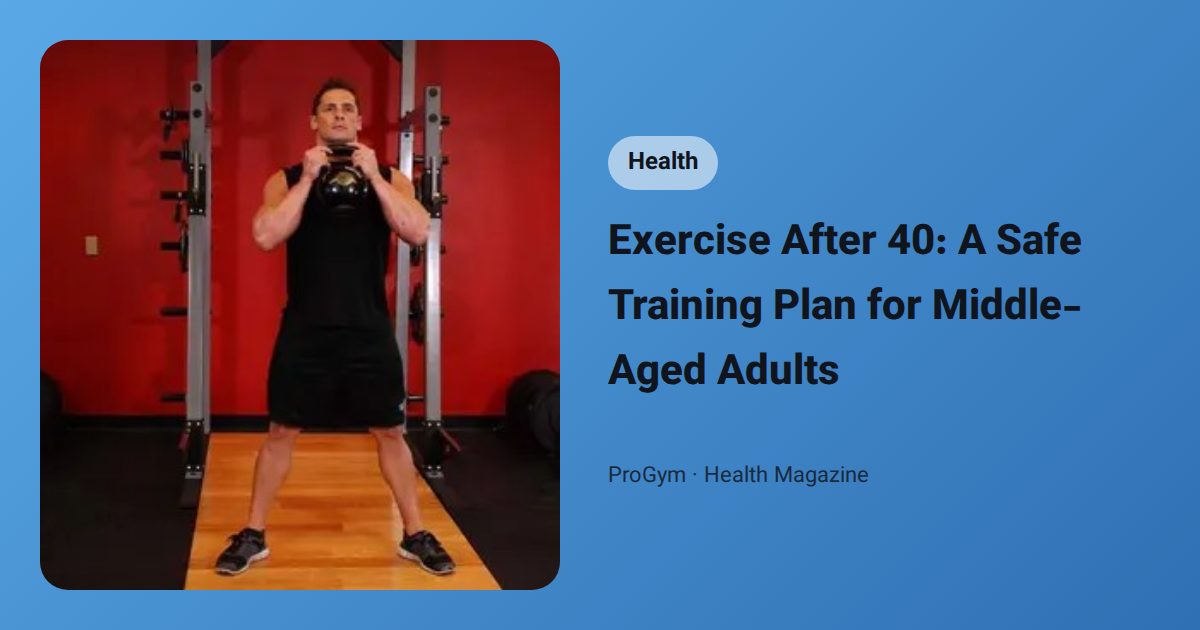
Resistance training preserves muscle and bone, improves insulin sensitivity and makes everyday tasks like carrying shopping or climbing stairs easier. Two to three sessions a week is enough. Focus on compound movements: a squat (for example the dumbbell goblet squat), a hip hinge such as a light Romanian deadlift, a chest press, a pulldown or row, a shoulder press and core work such as the plank.
In the first weeks, choose a weight you can lift for 12 to 15 reps with perfect form while keeping two or three reps in reserve. After four to six weeks, once your technique is solid, you can move to 8 to 12 reps with heavier loads. You can see how to perform every movement in the ProGym exercise library.
2. Aerobic activity: for your heart and blood vessels
Brisk walking, stationary cycling, the elliptical and swimming are low-impact, safe options. Aim at first for 30 minutes on most days at an intensity where you can talk but would struggle to sing. If your joints are healthy and your doctor has no objection, after a few months you can add one session of gentle interval training.
3. Mobility and flexibility
Ten minutes a day of stretching and mobility work for the hips, upper back, shoulders and ankles helps you perform strength exercises through a full, pain-free range. Moves such as the hip flexor stretch, cat-cow and spinal rotations are simple and effective.
4. Balance and stability
Balance training helps prevent falls in later years. Stand on one leg while brushing your teeth, practise heel-to-toe walking and include single-leg movements such as a light single-leg deadlift.
Sample weekly plan for exercise after 40
This plan is designed for beginners or people returning to exercise, and you can adapt it to your schedule:
- Saturday: full-body strength (goblet squat, dumbbell bench press, seated cable row, light Romanian deadlift, plank); 2 to 3 sets per exercise.
- Sunday: brisk walk for 30 to 40 minutes plus 10 minutes of stretching.
- Monday: active rest; easy walking or mobility work.
- Tuesday: full-body strength (reverse lunge, lat pulldown, dumbbell shoulder press, glute bridge, dead bug).
- Wednesday: stationary bike or elliptical for 30 minutes plus balance drills.
- Thursday: lighter strength session or swimming.
- Friday: easy hike or a family walk in the park.
For many Iranians, a weekend hike in Darband, Tochal or the mountains around their city is part of daily life. It is excellent exercise, but if you are inactive during the week, start with shorter routes and use trekking poles to reduce knee stress on descents.
Warm-up and cool-down: never skip them
After 40, a warm-up should not be a token two minutes. Give it 8 to 10 minutes:
- 3 to 5 minutes of light cardio such as cycling or brisk walking
- Dynamic mobility drills for the hips, shoulders and spine
- One or two light sets of the first strength exercise of the session
At the end of the session, a few minutes of slow walking and static stretching bring your heart rate down gradually and reduce next-day stiffness.
Recovery, sleep and nutrition in midlife
Progress happens during rest. Leave at least 48 hours between two hard strength sessions for the same muscle group. Sleeping 7 to 8 hours, managing work stress and cutting back on late-evening tea and coffee all directly affect recovery.
Nutritionally, getting enough protein at each meal from foods such as eggs, yogurt, cheese, chicken, fish and legumes helps preserve muscle. Dairy and leafy greens support bone health, and sensible sun exposure matters too. Any decision about medication, supplements or vitamins is your own responsibility and must be made with your doctor.
Common mistakes in midlife training
- Starting at your old intensity: jumping straight back to the weights or distances of your youth in week one is the most common cause of injury.
- Cardio only, no weights: walking is great, but it cannot replace strength training for maintaining muscle and bone.
- Ignoring pain: muscular fatigue is normal, but sharp joint pain or pain that worsens as you continue is a signal to stop.
- Inconsistency: three moderate sessions a week for months beats one brutal week followed by quitting.
- Comparing yourself with others: your body has its own history, job and circumstances; compare yourself with yesterday's you.
Summary
Exercise after 40 is not only safe, it is one of the best ways to age healthily and independently. Start with a medical check-up, aim for two to three strength sessions and about 150 minutes of aerobic activity per week, take warm-ups and balance seriously, and raise the intensity gradually. If you want a plan tailored to your age, injury history and goals, the ProGym online coaches can help.
Frequently asked questions
Is it dangerous to start strength training after 40?
No. If you start gradually and learn proper technique, strength training is very safe and beneficial in midlife. People with medical conditions or a long inactive period should consult a doctor before starting.
How many times a week should I exercise after 40?
Two to three full-body strength sessions plus about 150 minutes of moderate aerobic activity per week, such as brisk walking, is a good target for most people.
Should I only lift light weights in middle age?
In the first few weeks, yes, until your technique is solid. After that, gradually increase the load so the last reps of each set feel challenging, which is what preserves muscle and bone.
I have knee pain; can I still exercise?
Many people with mild knee pain can train with low-impact exercises and by strengthening the thighs and glutes, but the cause of the pain should first be assessed by a doctor or physiotherapist.
Workout and nutrition plans matched to your goal and level, free.