How to Track Training Progress: Lifts, Measurements and Photos
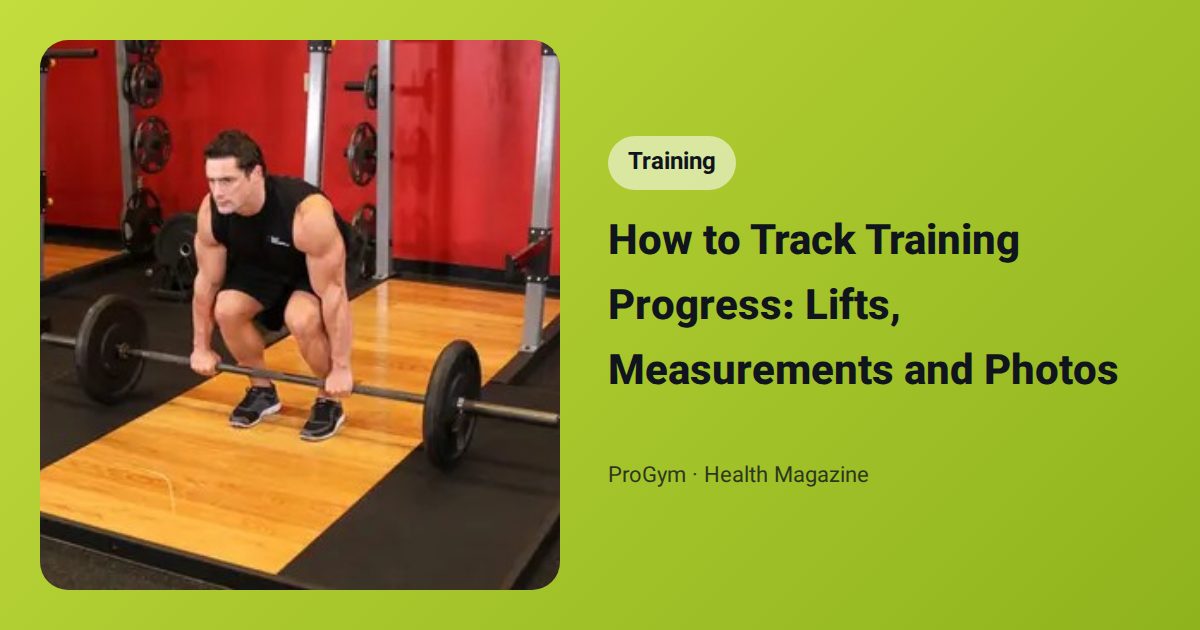
One of the most common sources of frustration in the gym is working hard but "feeling" that nothing has changed. The problem is usually not the training but the way it is measured. If you know how to track training progress, you stay motivated and you can see which parts of your program are working and which need to change. This article covers the three main tools, training logs, body measurements and progress photos, plus how to interpret the number on the scale.
Why you shouldn't rely on the scale alone
Body weight is the sum of muscle, fat, bone, water, gut contents and glycogen stores. The scale can swing by one to two kilograms in a single day simply because you ate a salty dinner, slept badly or are at a certain point in your menstrual cycle. If you lose fat and build muscle at the same time, which is common in beginners and people returning after a break, your weight may stay almost flat while your body clearly improves.
That is why the best approach combines several markers. None is perfect on its own, but together they give an accurate picture.
Tool one: a training log and your lifts
If your goal is to get stronger or build muscle, the most important marker of progress is your performance in training. Muscle grows when you gradually ask it to do more work, a principle called progressive overload. Without a log, you won't remember what weight and how many reps you did last week.
What should you record?
- Exercise name, weight, sets and reps for every session
- Effort per set: for example how many reps you had left in reserve (RIR) or an effort score from 1 to 10
- A short note: sleep quality, pain or discomfort, changes in technique
A paper notebook, a phone note or the workout log in an app all work; use whichever is easiest. Consistency matters more than the tool.
How to read progress in your log
Progress does not only mean adding weight. Each of the following counts:
- The same weight for one or two more reps
- The same weight and reps with better form or a fuller range of motion
- The same work with shorter rests between sets or lower perceived effort
- Higher total volume, meaning weight times reps times sets for a given exercise
For your main lifts, such as the squat, deadlift, bench press and pulldown, compare every four to six weeks. If you have made no progress on any main lift for two or three weeks in a row, it is time to look at sleep, nutrition, training volume or exercise selection. Beginners don't need one-rep-max tests; comparing your best set of 5 to 8 reps is safer and just as useful.
Tool two: body measurements
A tailor's tape measure is one of the cheapest and most accurate ways to track body changes at home. Waist circumference in particular is an important health marker, because abdominal fat is linked to the risk of heart disease and type 2 diabetes.
Which sites should you measure?
- Waist: at navel level or midway between the lowest rib and the top of the hip bone, after a normal exhale
- Hips: at the widest point of the buttocks
- Chest: at nipple level with arms by your sides
- Upper arm: at mid-arm, relaxed or flexed (always the same)
- Thigh: about 15 cm above the kneecap
Rules for accurate measuring
- Always measure at the same time, ideally in the morning before eating and after using the toilet.
- Keep the tape snug but not compressing the skin, and parallel to the floor.
- Always measure the same side of the body, take each site twice and use the average.
- Every two to four weeks is enough; daily measuring only shows noise.
If your goal is fat loss and your waist has dropped by one to two centimetres in a month, you are on the right track even if the scale has barely moved. For muscle gain, a slow increase in arm and thigh size while the waist stays stable or rises only slightly is a good sign.
Tool three: progress photos
We see ourselves in the mirror every day and miss gradual change. Photos taken a month apart often reveal what the scale and the mirror were hiding. But photos are only comparable when the conditions are consistent.
How to take standard progress photos
- Consistent lighting: same place and time of day; natural light from the front is better than overhead light.
- Fixed camera distance and height: put your phone on a stand or shelf at waist height and use the timer.
- Three angles: front, side and back, with arms relaxed by your sides.
- Same clothing: wear the same workout outfit every time.
- Natural posture: don't suck in your stomach or flex, unless you also take a separate flexed photo.
Store the photos in a private, dated folder. Comparing today's photo with one from eight to twelve weeks ago is usually the most motivating view.
Interpreting the scale correctly
If you keep using the scale, use it wisely. Weigh yourself three to seven times a week, in the morning before eating, after the toilet and in light clothing, then compare your weekly average with the previous week rather than one day against the next. A sudden one-kilogram jump after a party is usually water and salt, and it disappears within a few days.
For fat loss, losing around 0.5 to 1 percent of body weight per week is a sensible, sustainable range. For muscle gain in non-beginners, a slow increase of a few hundred grams per month is usually better than rapid gain. To estimate calories and BMI, you can use the ProGym calorie and BMI calculator.
Don't underestimate non-scale victories
Many of the most important changes never show up as a number:
- Better sleep and more energy during the day
- Climbing station stairs or carrying shopping without getting tired
- Less back or neck pain from sitting at a desk
- Looser trousers or tighter shirt sleeves
- A steadier mood and lower stress
Note these in your log once a month too. If you have a medical condition, track markers such as blood pressure or blood sugar as your doctor advises, and get your doctor's clearance before starting or intensifying an exercise program.
A simple progress-tracking schedule
- Every session: log weight, sets, reps and effort
- Daily or several times a week: morning weight and a weekly average
- Every two to four weeks: waist, hip, arm and thigh measurements
- Every four weeks: progress photos from three angles and a comparison of main lifts
- Every eight to twelve weeks: a full program review, with a coach or on your own
Common mistakes in measuring progress
- Measuring too often: daily waist measurements or daily photos only create anxiety.
- Changing the conditions: weighing in the morning one day and at night the next makes comparisons meaningless.
- Comparing with other people's photos: lighting, angles and editing on social media are not reality.
- Changing programs after one week: you need at least four to six weeks of data to judge a program.
Summary
To know whether your training progress is real, don't rely on a single number. Your training log shows whether you are getting stronger, the tape measure shows changes in body composition, photos reveal visual change and the weekly average weight shows the overall trend. Record this data consistently, review it every few weeks and adjust your program accordingly. If you want help interpreting the data or refining your plan, the ProGym online coaches are here for you.
Frequently asked questions
How often should I weigh myself?
If you use the scale, weigh yourself several times a week in the morning before eating and compare weekly averages. If weighing stresses you out, once a week is enough.
Why isn't my weight dropping when my clothes feel looser?
You are probably losing fat while building muscle, or water fluctuations are masking the change on the scale. A smaller waist measurement is a more reliable sign of fat loss.
When is the best time to take progress photos?
In the morning, before eating and before training, with the same lighting, angle, camera distance and clothing. Taking photos every four weeks is enough to see change.
What should I do if my lifts stall for several weeks?
First check your sleep, nutrition and stress. If those are fine, changing the rep range, adjusting training volume or taking a lighter deload week usually helps.
Workout and nutrition plans matched to your goal and level, free.